
I have to admit that I am obsessed with TPM to some extent. So when I find out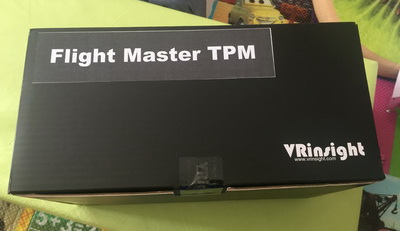 VRInsight had released a standalone TPM recently, I ordered one without much hesitation, even though I just had purchased a GoFlight GF-TPM not too long ago.
It took about 2 weeks to receive the Flight Master TPM from the company directly.
The Body
Like its bigger brothers Flight Master Yoke-II I reviewed last August, the unit is housed in a relative 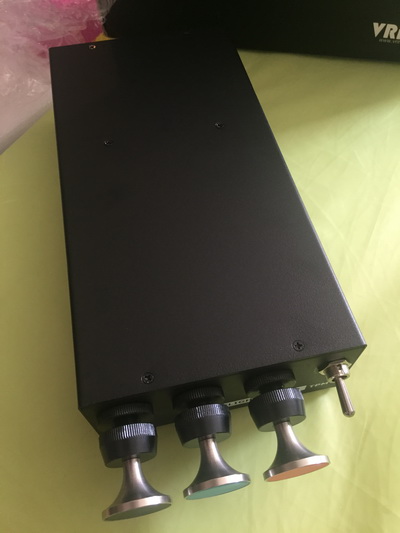 large and heavy metal chassis, with a dimension of 12.20 inch (D) x 5.23 inch (W) x 2.56 inch (H) — 31 cm (D) x 13.3 cm (W) x 6.5 cm (H) — and a weight of about 4 lb (1.8 kg).
The design of the front panel is straightforward. Besides the three push/pull throttle, propeller and mixture controllers, there is only a programmable toggle switch.
Connection to the computer is via a standard USB 2.0 port in the back of the unit. External power supply is not required.
The Controllers
The three push/pull controllers are made of stainless steel (I believe) with cone 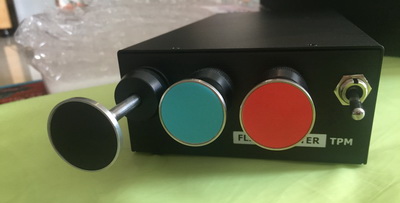 shape knobs colored in black, blue and red for the throttle, propeller and mixture respectively.
On each controller, two nuts are seen on the shaft — one for attaching the controller to the 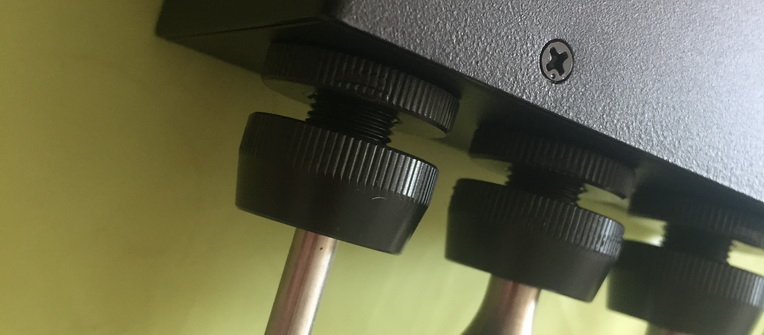 chassis, and the other for adjusting the push/pull action force magnitude through loosening or tightening the nut.
I am not sure if such an “adjustable” design is firstly implemented by VRInsight or not. But I am sure that it is thoughtful idea to allow users to flexibly adjust TPM forces according to their needs and preferences, even on a case by case basis. In addition, the design, to a certain degree, simulates the locking mechanism found on a real, light aircraft.
DEFECTS
Sadly, the unit I received has defects, not only in design but in quality as well.
Firstly, the three metal TPM knobs are positioned too close to each other or the knobs are a bit oversized. It is very easy to touch and affect the neighboring axes during operations. In addition, besides the throttle knob is smooth, neither the pitch knob is grooved nor the mixture knob is ridged. (Thanks to Law Legge who explained to me what smooth, grooved and ridged mean.)
Secondly, the Throttle shaft is somehow hindered by something inside the chassis. It has nothing to do with the screwing nut. So the movement of it is not smooth at all. The other two axes are fine.
Thirdly, all nuts used on the TPM axes were badly damaged by some “clippers” 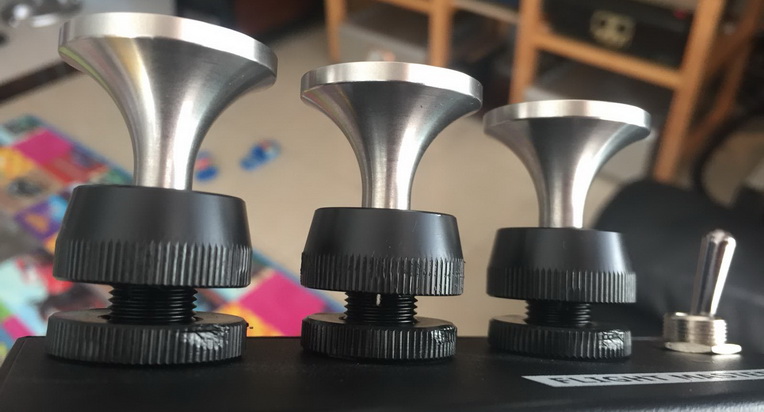 or “clampers” during production. I couldn’t image VRInsight actually sent out such a unit to their customer.
The serial of the unit reveals that the TPM I received belongs to the very first few production. I can’t stop thinking if it is one of the pre-production prototypes, intentionally or unintentionally delivered out of the factory.
Fixes
No, there is no fix. After I reported the issues to VRInsight the same day I got the unit, the company asked me to contact their courier service to return the unit for a full refund without further question. I did that the very next day without asking for a replacement, too.
Frankly speaking, the TPM does match nicely with its elder brother Yoke II in my cockpit setup, and its tightening nuts design is attractive. Unfortunately the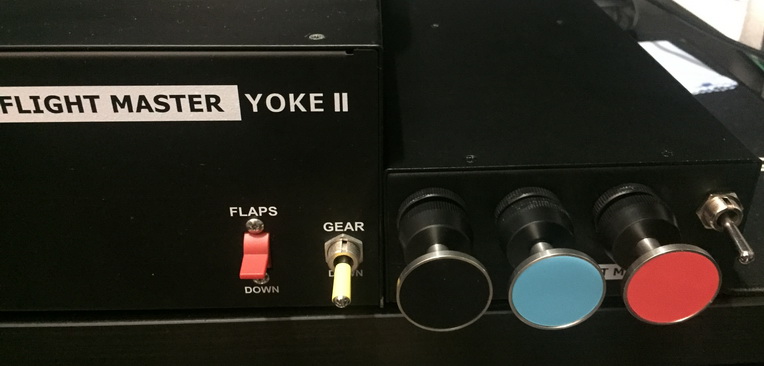 overall result and the quality control of the product is less than ideal.
What a pity!
 FS Times
Hi Tom
Shame about the VRi TPM, agree about your comments on the knobs being to close together for comfort, still using the Saitek TPM here that I have built flush into my desk unit, its one of the better Saitek units I feel. I do like its different textured knob grips that mean I can reach down in a darkened room on a night flight and know by feel what one to use … dont think I’ve programmed anything to its switches though, everything is covered by other controllers for what I need.
LikeLike
Yes. The Saitek one is good but I like the GoFlight one due to its smaller size.
LikeLike